
If you are burned out from studying, the most effective first step is to temporarily reduce your academic demands and prioritize sleep and basic routines. Recovery is gradual and works best when structural changes, like cutting your workload, pair with skill-building tools such as mindfulness or cognitive restructuring. Research on student burnout interventions supports programs lasting several weeks when combined with genuine demand reduction.
TL;DR:
- Reducing academic workload and prioritizing sleep are essential first steps to recover from prolonged burnout, especially when symptoms include exhaustion and disengagement.
- Structured, multi-week interventions that combine demand reduction with skill-building practices like mindfulness and cognitive restructuring produce the most significant and lasting improvements.
- Short-term burnout recovery can happen quickly, but full restoration often requires staged efforts, routine adjustments, and support from peers or professionals.
- Maintaining healthy habits such as consistent sleep, light exercise, balanced nutrition, and limiting digital distractions helps prevent relapse after initial recovery.
- Regular self-check-ins and setting boundaries around workload are critical to sustain progress and avoid returning to the same intense demands that caused burnout.
Table of Contents
- What study burnout is and why it differs from ordinary tiredness
- Symptoms and a quick self-assessment to gauge severity
- Why demand reduction matters and what recovery timelines actually look like
- Evidence-based strategies that actually help
- A stage-based recovery plan you can copy
- When to seek professional or campus support
- The role of nutrition and hydration in recovery
- Techniques for preventing relapse after recovery
- Technology and digital detox methods to aid recovery
- How study burnout differs from general stress or depression
- The impact of social support on recovery
- A short note on realistic recovery
- Protecting your recovery time with an adaptive study planner
- Sources
- FAQ
What study burnout is and why it differs from ordinary tiredness
Academic burnout is not the same as feeling tired after a long week. It has three recognizable dimensions:
- Prolonged exhaustion that does not lift after a weekend of rest.
- Disengagement or cynicism toward coursework, classes, or the value of your degree.
- Reduced effectiveness, meaning tasks that once felt manageable now take longer and produce worse results.
Ordinary exam fatigue fades within days once the test is over. Burnout lingers and builds from sustained workload, low control over your schedule, poor sleep, and social isolation.
Symptoms and a quick self-assessment to gauge severity
Burnout shows up across three categories. Physically, you may notice disrupted sleep and persistently low energy. Cognitively, expect brain fog and trouble concentrating even on simple readings. Emotionally, apathy toward subjects you used to care about and irritability with friends or family are common signs.
A short functioning checklist can help you gauge severity:
- Are you missing classes or skipping assignments you would normally complete?
- Has your sleep schedule shifted by more than an hour or two most nights?
- Are you withdrawing from friends, roommates, or study groups?
- Do you feel unable to start work you know is due soon?
If you answer yes to most of these, or if you notice thoughts of self-harm, an inability to function at all, or sleep loss lasting more than a week, treat that as a red flag requiring prompt outside support rather than something to manage alone.
Why demand reduction matters and what recovery timelines actually look like
Stress and exhaustion feed each other. When you are already depleted, the same workload feels heavier, which drains you further and can stretch out recovery. This reciprocal loop is one reason productivity hacks alone rarely fix burnout: a better to-do list does not reduce the objective number of hours a heavy course load demands.
A systematic review and meta-analysis of student burnout interventions found a pooled effect of g+ = 0.90 across 14 analyses, meaning structured interventions produced a meaningfully large reduction in burnout symptoms. That effect size reflects programs that combined multiple weeks of practice with real changes to routine, not one-off fixes.
Recovery from acute, short-term academic stress can happen fairly quickly for many people, but full recovery from sustained burnout takes longer and usually needs staged intervention rather than a single strategy. A meta-analysis of learning-burnout interventions found that programs lasting several weeks produced substantially larger effects than shorter ones, which argues against expecting a quick fix.
Evidence-based strategies that actually help
No single strategy resolve burnout on its own. The strongest evidence points to a combination of structural change and skill-building practices, layered together over weeks rather than days.
The meta-analysis of student burnout interventions found the strongest evidence for randomized trials using rational-emotive-behavior approaches and mindfulness-based interventions. Separately, the review of learning-burnout interventions found exercise-based programs and those running eight weeks or longer produced larger effects than brief, one-off sessions.
Here is how to apply each approach practically:
- Sleep hygiene: keep a consistent wake time, dim screens an hour before bed, and treat 7 to 8 hours as a floor, not a target.
- Graded exercise: 15 to 20 minutes of walking or light cardio most days builds tolerance without adding pressure.
- CBT and REBT-style restructuring: spend 5 to 10 minutes writing down the automatic thought behind your stress ("I'll never catch up") and a more balanced version ("I can catch up on one assignment today").
- Short mindfulness practice: 5 to 10 minutes of breathing or body-scan exercises, done daily, matches the format used in the trials with the strongest results.
- Social support: a short check-in with one friend or family member most days, focused on connection rather than complaining about workload.
Pro Tip: Treat these as adjuncts to workload reduction, not replacements for it: no amount of mindfulness fixes a genuinely unsustainable course load.
The CDC's guidance on caring for your mental health frames these habits as part of a broader pattern: supportive relationships and manageable routines are protective factors, while isolation and unrelenting demand are risk factors. None of these strategies work in isolation. Sleep restoration makes exercise easier to sustain, exercise improves mood enough to make cognitive restructuring feel less forced, and social contact gives you somewhere to test out the more balanced thoughts you are practicing.
A stage-based recovery plan you can copy
Recovery works best as a staged process rather than a single decision. Below is a practical template you can adapt to your own schedule.
Immediate triage (day one to three):
- Pause or postpone every nonessential task and commitment.
- Fix your sleep schedule first, even before touching coursework.
- Tell one person, a friend, roommate, or family member, what you are dealing with.
- Book any low-pressure appointments you have been avoiding, such as an advising check-in.
Sample 7 to 14 day recovery window:
| Day range | Focus | Study load |
|---|---|---|
| Days 1 to 3 | Sleep restoration, rest, one support conversation | None |
| Days 4 to 7 | Light movement, two short low-stakes study blocks | 20 to 30 minutes per block |
| Days 8 to 14 | Gradual reintroduction, social contact maintained | 30 minutes, two to three sessions daily |
Phased return to study:
- Set a clear stop criterion before each session, such as "I stop after 30 minutes regardless of progress."
- Keep sessions short and focused on one task rather than an open-ended block.
- Negotiate workload or deadline accommodations with instructors before ramping back up.
- Track how you feel after each session, not just what you completed, and adjust the next day's load accordingly.
When to seek professional or campus support
Some situations call for more than self-management. Seek help promptly if you notice any safety concerns, a major loss of functioning such as missing multiple weeks of classes, or sleep disruption that persists beyond a week or two despite trying to fix it.
Useful places to start:
- Campus counseling services, usually free or low-cost for enrolled students.
- Disability services, which can arrange formal accommodations if burnout is affecting your ability to complete coursework.
- Academic advisors, who can help you drop a course or reduce your credit load without long-term penalty.
- Primary care providers, especially if physical symptoms like sleep loss or appetite changes are severe.
If you are in crisis or unsure where to turn, the CDC's mental health guidance points to 988, a free, confidential crisis line available 24/7 in the United States. A simple script for asking an instructor for help might be: "I'm dealing with burnout and need a short extension on this assignment so I can submit quality work." For a heavier ask, try: "I'd like to talk about temporarily reducing my course load while I recover."
The role of nutrition and hydration in recovery
Food and water intake will not resolve burnout by themselves, but neglecting them makes every other recovery step harder. Skipped meals and dehydration compound fatigue and brain fog, the same symptoms that already define burnout, which makes it difficult to tell how much of your exhaustion is psychological versus physical.
A few practical habits matter more than any specific diet plan. Eating at regular times, even small meals, helps stabilize energy levels throughout the day instead of relying on caffeine spikes and crashes. Keeping water within reach during study sessions is a low-effort habit that supports concentration, since even mild dehydration can worsen the cognitive fog that burnout already causes.

Caffeine deserves specific attention because it is often used to compensate for the exhaustion burnout causes, which can worsen the sleep disruption driving the burnout in the first place. Cutting back gradually rather than all at once tends to be more sustainable, and shifting your last cup earlier in the day protects the sleep restoration that recovery depends on most.
None of this requires strict meal planning or tracking. The goal during recovery is consistency: regular meals, steady hydration, and less reliance on stimulants to push through exhaustion that your body is already signaling it cannot sustain.
Techniques for preventing relapse after recovery
Recovering from burnout once does not make you immune to it happening again, especially if you return to the exact conditions that caused the crash. Practitioner guidance on staged burnout recovery emphasizes rebuilding resources gradually and avoiding an immediate return to the same workload and environment that led to the original episode.
A few habits reduce relapse risk meaningfully. Build in a recurring, low-effort check-in with yourself, weekly is often enough, where you rate your energy, sleep quality, and motivation on a simple scale. A noticeable dip for more than a few days is a signal to scale back before it becomes a full relapse rather than after.
Protecting recovery gains also means setting boundaries around workload creep. It is common to slowly take back on the commitments you dropped during the acute phase, one extra club meeting here, one favor for a classmate there, until the schedule looks the same as it did before burnout hit. Treat your reduced course load or lighter commitment list as the new normal for at least a few weeks, not a temporary dip to abandon as soon as you feel better.
Emotion-regulation patterns matter here too. A 2025 study on academic burnout found that seeking reassurance with a specific, practical request, like asking an instructor for a deadline shift, was linked to stronger social support and lower burnout, while repeated venting without a clear ask tended to erode that same support over time. Framing help-seeking around a concrete change rather than general complaint keeps the people around you engaged rather than fatigued by the conversation.
Technology and digital detox methods to aid recovery
Constant notifications and open tabs are a quiet but real contributor to academic exhaustion, since they keep your attention fragmented even during supposed rest periods. A digital detox during recovery does not mean abandoning your phone entirely. It means creating specific windows where academic apps, email, and social media are simply not accessible.
Start with your sleep window first, since screen use before bed is one of the more direct paths connecting technology habits to the sleep disruption already tied to burnout. Turning off notifications an hour before your target bedtime, or leaving your phone in another room, protects the sleep restoration your recovery plan depends on.
During study blocks, use focus tools that block distracting sites and apps for a set period rather than relying on willpower alone. Short, timed sessions, 25 to 30 minutes, followed by a real break away from screens, tend to work better during recovery than long unstructured study stretches, because they match the reduced cognitive stamina burnout causes.

An adaptive planner can also reduce the background mental load of tracking deadlines across multiple apps and syllabi, which is its own quiet source of stress. Fewer places to check for updates means fewer moments where your brain is pulled back into work mode during a rest period.
How study burnout differs from general stress or depression
Burnout, stress, and depression overlap in symptoms but are not interchangeable. Ordinary stress is usually tied to a specific, identifiable cause, an upcoming exam or deadline, and tends to ease once that event passes. Burnout is more diffuse: it builds from sustained demand over weeks or months and does not resolve simply because one assignment is turned in.
Burnout is also specifically tied to functioning within a role, in this case, being a student. The three dimensions of exhaustion, cynicism, and reduced effectiveness are measured relative to schoolwork, which is why someone can be burned out on their coursework while still functioning normally in other parts of life. Depression, by contrast, tends to affect mood and functioning more broadly across contexts, not just academics, and often includes persistent sadness or loss of interest that extends well beyond schoolwork.
There is no single widely accepted framework of numbered stages or fixed categories for burnout recovery. Clinical and research approaches instead focus on assessing exhaustion, cynicism, and inefficacy through validated symptom measures, alongside how much the person's daily functioning has been affected. If your low mood, loss of interest, or hopelessness extends beyond your studies into everyday life, or persists even during breaks from school, that pattern points more toward depression than burnout and is a good reason to speak with a counselor or doctor rather than trying to self-manage it as academic fatigue.
The impact of social support on recovery
Isolation tends to make burnout worse, and rebuilding connection is one of the more consistently protective factors across the research. The CDC's guidance on mental health specifically names supportive relationships and school connectedness as protective factors against the kind of chronic stress that drives burnout.
Family, friends, and peers each play a slightly different role. Friends and peers going through the same courses can validate that your exhaustion is not a personal failing, since they are often facing the same workload pressures. Family can offer a lower-stakes space to rest without academic context at all, which matters when burnout has made even casual conversations feel tied to performance.
How you ask for support matters as much as whether you ask. Research on academic burnout found that seeking reassurance paired with a specific, practical request, like asking a friend to study alongside you rather than alone, was linked to better social support outcomes than open-ended venting, which can wear down the people around you over time without producing any change in the underlying pressure. A short, direct conversation, "I'm struggling with this course load and could use a study partner this week," tends to work better than a longer complaint with no clear ask attached.
Peer groups and study partners also create informal accountability that supports the phased return to study covered earlier: a scheduled study session with someone else is harder to skip than a solo block, and it gives you a built-in check on whether your pace still feels sustainable.
A short note on realistic recovery
Burnout is common among students and reflects real workload and structural pressure, not a personal failing. Pick one small change this week, track how your energy responds, and reach out for support if you are unsure where to start.
— Syncronos
Protecting your recovery time with an adaptive study planner
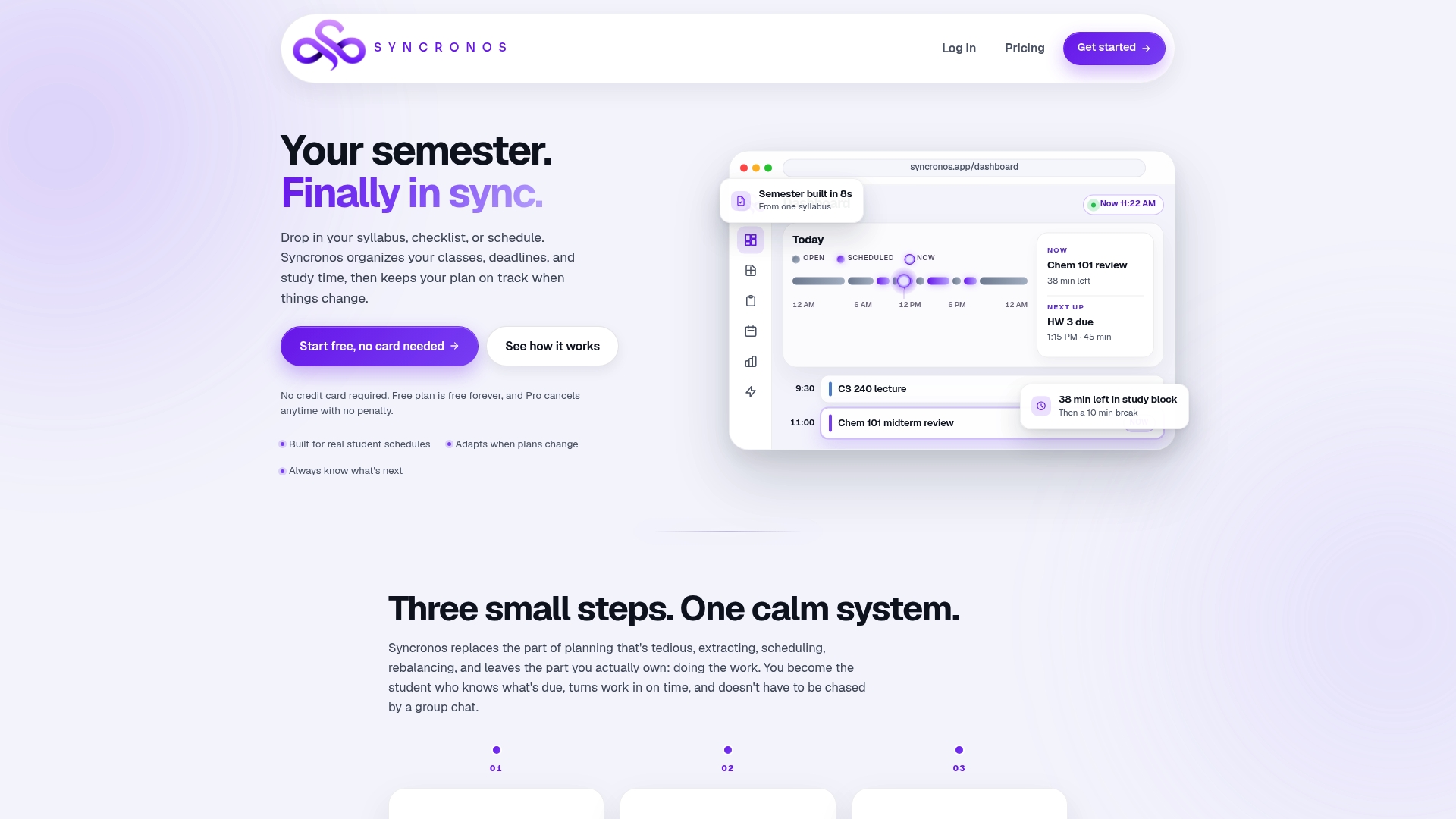
Recovery works best when your schedule actually reflects your reduced capacity instead of quietly reverting to old deadlines. An adaptive study planner extracts tasks and due dates from syllabi and to-do lists, then rebalances study blocks automatically when plans change, so a lighter week stays lighter instead of catching up later. If you drop a project deadline or cut a study session short, the syllabus-to-calendar tool redistributes the remaining work rather than stacking it back onto tomorrow. Students who want to try it can start with the free tier or view plans and pricing.
Sources
- Interventions to reduce burnout in students: A systematic review and meta-analysis
- Effect of interventions on learning burnout: A systematic review and meta-analysis
- Caring for Your Mental Health | CDC
FAQ
What is the 42% rule for burnout recovery?
If you have encountered this term, treat it cautiously and rely instead on validated approaches like staged demand reduction and multi-week interventions with documented evidence behind them.
What are the 5 C's of burnout?
There is no single authoritative "5 C's" model in the clinical or research literature on burnout. Clinical practice instead assesses burnout through validated measures of exhaustion, cynicism, and reduced effectiveness, alongside its impact on daily functioning.
What are the 7 stages of burnout?
No consensus "7 stages" framework exists in peer-reviewed burnout research. Practitioner guidance instead describes a general staged pattern: early demand reduction and sleep restoration, followed by structured low-stakes study reintroduction, with professional support reserved for persistent or severe symptoms.
Can you ever fully recover from burnout?
Many people recover meaningfully from burnout, especially with combined structural and skill-based approaches, though timelines vary by severity and circumstances. Research on structured student interventions shows programs lasting eight weeks or longer tend to produce larger, more durable improvements than brief fixes.