
The fastest way to regain control of a packed semester is to build one master calendar and treat study blocks like paid appointments, not suggestions. Add a 20 to 30 percent buffer for overruns, protect sleep the same way you'd protect a shift, and run a 15-minute weekly review. The CDC's sleep guidance and tools like Syncronos exist because this system, done manually, breaks down fast. The rest of this guide shows exactly how to build it.
TL;DR:
- Filling your master schedule with fixed shifts and class times first reveals your true study capacity, preventing overcommitment.
- Breaking assignments into milestone tasks and scheduling each step reduces overwhelm and increases timely completion.
- Longer, focused study blocks of 50 to 90 minutes with real breaks outperform shorter sessions and boost retention.
- Protecting sleep and energy is crucial, with sleep scheduled before study blocks to maintain consistent productivity and avoid burnout.
- AI tools like Syncronos automate calendar adjustments for shift changes and deadlines, saving time and reducing manual rescheduling errors.
Table of Contents
- Working student time management starts with a real master schedule
- Schedule around your job with anchor and flexible blocks
- Break big assignments into steps you can actually schedule
- Structure your study sessions for real focus
- Protect your energy so the schedule doesn't collapse
- How an AI syllabus-to-calendar planner helps busy students claim time
- Small experiments beat a perfect plan
- Try Syncronos for a 10-minute setup, not a semester-long project
- Sources
- FAQ
Working student time management starts with a real master schedule
Most students plan classes first and squeeze work around them. That's backward. Enter your paid shifts first, since they're immovable, then layer in class times, commute, sleep, and any recurring obligations. Only after that should you estimate study hours per credit and slot specific tasks, not a vague "study" block, into whatever real space remains.
A scheduling framework built for working college students recommends this exact order because it reveals your true capacity before you overcommit.
- List every shift, class meeting, and commute segment for the next two weeks.
- Estimate 2 to 3 study hours per credit hour, then assign named tasks ("read Chapter 4," not "study bio").
- Reserve a weekly catch-up block worth 20 to 30 percent of your study time to absorb overruns.
- Pull every syllabus and extract due dates, exam windows, and project milestones before week one ends.
Schedule around your job with anchor and flexible blocks
Fixed shifts and rotating schedules need different tactics, so split your week into three block types: anchor blocks (fixed, like a Tuesday 6 a.m. class), flexible blocks (moveable study time you can shift), and one catch-up block per week. This taxonomy, outlined by Scheduloom, lets you rebuild your week in minutes instead of starting over.
- When new shifts post, add them first, keep every anchor block untouched, and move flexible sessions around the gaps.
- Recheck upcoming deadlines against the new week immediately, since a shift swap can quietly bump a study block off the calendar entirely.
- Use commute time and breaks for active recall, flashcards, or a quick review of notes instead of letting that time evaporate.
- Test a morning study window against an evening one for two weeks each, then keep whichever produces sharper focus and drop the other.
Break big assignments into steps you can actually schedule
Working backward from a due date turns an overwhelming project into a set of small, calendar-ready tasks. Prospects' time management guidance recommends staging deadlines this way specifically because vague, single-block assignments get skipped.
- Set milestone dates working backward from the due date: outline, draft, revise, final polish.
- Estimate how long each stage will take, then log your actual time afterward. Most students underestimate by 30 to 50 percent, a pattern known as the planning fallacy.
- Use the five-minute start rule: commit to just five minutes on the task, which usually breaks the inertia that causes procrastination.
- Triage everything on your plate by grade weight, difficulty, and how close the deadline sits.
Pro Tip: Write your implementation intention as a specific sentence: "After my 2 p.m. shift ends, I'll open my laptop and outline the essay for 25 minutes." Vague plans like "I'll study tonight" rarely survive a tiring day.
Breaking assignments this way also makes it easier to slot pieces into a tool built for tracking assignments alongside a job, since each staged task becomes its own calendar entry instead of one intimidating block.
Structure your study sessions for real focus
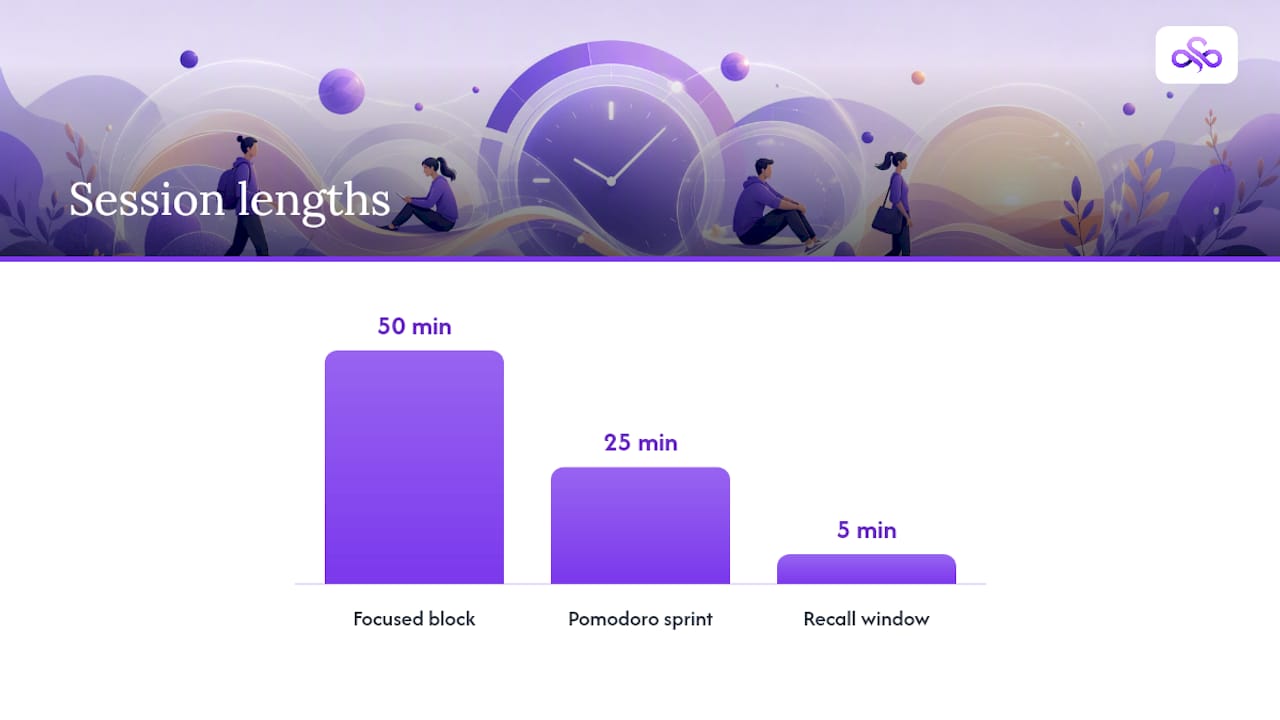
Traditional 25-minute Pomodoro sprints work for some tasks, but when your schedule actually gives you a longer uninterrupted window, stretch that sprint to 50 to 90 minutes and pair it with a genuine, non-screen break. A science-based study on session length and spacing found that a roughly 50-minute focused block followed by a real break outperforms both shorter fragmented sessions and marathon cramming.
Spacing matters more than duration. Reviewing material across several short sessions, with retrieval practice each time, builds retention that a single long cram session can't match.
- Set a goal. Name exactly what this session accomplishes before you start.
- Work the block. No phone, no tabs, one task.
- Recall for five minutes. Close your notes and write what you remember.
- Take a real break. Stand up, step outside, don't scroll.
If your week is genuinely overloaded, three 25-minute sessions a week per subject is a legitimate minimum, not a compromise. That same research frames short, frequent sessions as more durable than the infrequent all-nighter most students default to under pressure.
Protect your energy so the schedule doesn't collapse
A calendar full of perfectly planned study blocks means nothing if you're too exhausted to use them. Protecting sleep isn't a luxury item on your to-do list; it's a performance input, the same way a shift or a class is. Scheduloom's planning framework puts sleep on the calendar before study time for exactly this reason.
- Batch errands, laundry, and administrative tasks into one weekly window instead of letting them interrupt focus blocks throughout the week.
- Set a polite, direct boundary with your manager or classmates when a request threatens a protected block: "I can help after 6, not before."
- When workload consistently exceeds capacity for more than two weeks, that's your signal to drop a credit or cut work hours, not push harder. Research recommends adjusting capacity early rather than waiting for a breakdown.
- Add small rituals: a two-minute pre-shift reset, water at your desk, a short walk during breaks.
How an AI syllabus-to-calendar planner helps busy students claim time
Manually rebuilding a calendar every time a shift changes is exactly where working students lose the system. Some AI planners read uploaded syllabi and to-do lists, extract deadlines and milestones, and build prioritized calendars automatically. When your manager swaps your Thursday shift, the schedule rebalances study blocks around it instead of leaving you to redo the math by hand.
A simple paper planner works fine for a stable schedule with one class load and steady hours. An AI planner earns its keep when you're juggling rotating shifts, four or five classes with overlapping deadlines, or a semester where your availability changes weekly.
- Upload your syllabi so the system extracts deadlines and exam dates automatically.
- Add your work shifts so study blocks build around real availability, not guesswork.
- Run a weekly reset to catch anything that shifted.
- Accept the suggested catch-up blocks instead of skipping them when the week runs long.
You can see the extraction step in action through Syncronos's syllabus to calendar workflow, and readers weighing AI tools generally against manual planning may find useful context in this overview of AI tools for student workflows.
Small experiments beat a perfect plan
The mindset shift that actually sticks isn't finding more hours. It's claiming the hours you already have and defending them the way you'd defend a paycheck. Most working students who burn out didn't fail at discipline; they never built a system that survived a schedule change.
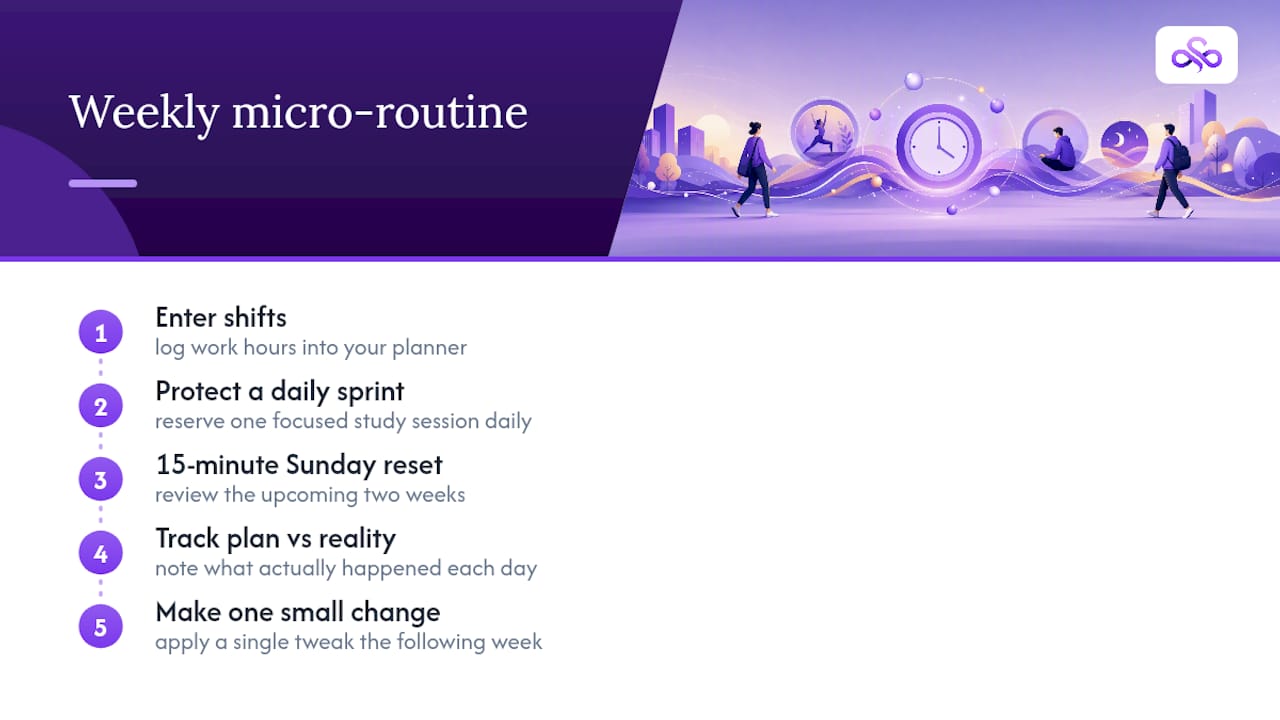
Start minimal: enter your shifts, protect one daily study sprint, and run a 15-minute Sunday reset looking at the next two weeks. Track what actually happens versus what you planned, then make one small adjustment the following week. A 15-minute weekly reset is one of the highest-leverage habits available to a time-poor student, and it costs almost nothing to try.
— Syncronos
Try Syncronos for a 10-minute setup, not a semester-long project
Some AI study planners automate the system this guide describes: pulling deadlines from syllabi, rebuilding calendars when shifts change, and surfacing catch-up blocks before missed sessions accumulate. Setup may take about 10 minutes.
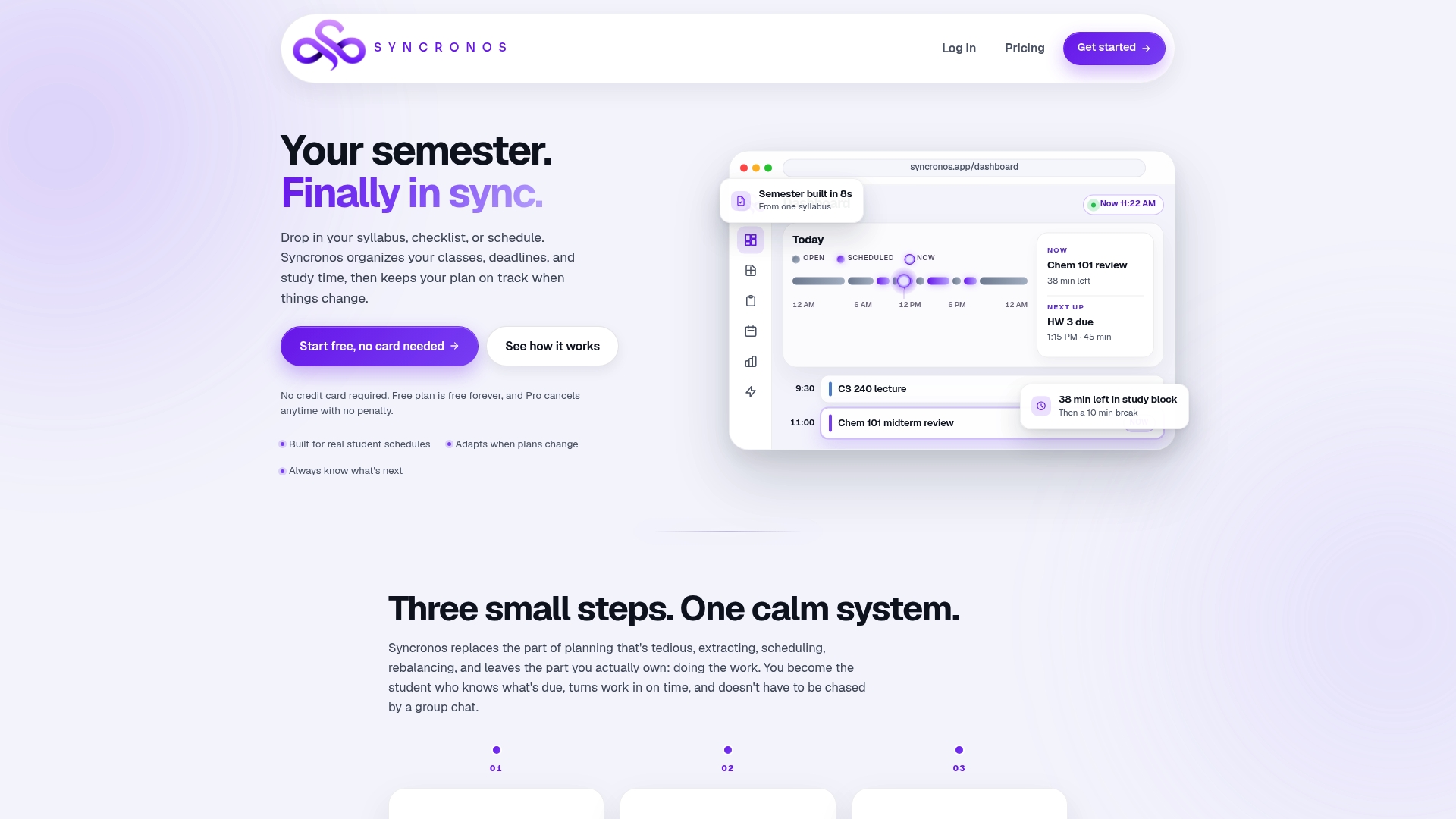
If you're tired of rebuilding your week by hand every time your manager posts a new schedule, start with the free plan and upload one syllabus to see how the calendar builds itself. Check the full planner overview if you want to see how AI-optimized rescheduling works before committing to anything.
Sources
- Study schedule for working college students (scheduloom)
- Research
- 7 time management tips for students | Prospects
FAQ
What is the 3-3-3 rule for time management?
The 3-3-3 rule suggests spending three hours on your most important task, three hours on smaller urgent tasks, and three hours on maintenance items like chores or admin work each day. Working students often need to scale the hours down, but the priority order (deep work, urgent items, upkeep) still applies.
How do working students manage their time?
Successful working students build one master calendar that lists shifts first, then classes, study blocks, and sleep, and they add a 20 to 30 percent buffer for overruns. Tools like Syncronos automate that process by extracting deadlines from syllabi and adjusting the schedule when shifts change.
What is the 9 8 7 rule for studying?
Definitions vary across sources, and there's no single verified standard for a "9 8 7 rule" in study planning. If you've seen it referenced, treat it as informal advice rather than an established framework, and lean instead on evidence-backed spacing and session-length guidance.
What are the 5 P's of time management?
Common versions cite Prioritize, Plan, Prepare, Perform, and Perfect, though the exact wording shifts between sources. The underlying idea, ranking tasks, scheduling them, preparing materials, executing, then reviewing, matches the prioritization and weekly-review habits covered throughout this guide.